Most consumers never think about fabric production. They select materials based on appearance, feel, and price—unaware of the complex journey from raw fiber to finished fabric. At Almarwan Fabrics, this journey defines everything we do.
Understanding our manufacturing process reveals why in-house production matters and how it guarantees the quality our customers depend on.
Why Manufacturing Matters
Many fabric companies are essentially traders—they buy finished products from various manufacturers, add margins, and resell. This model limits quality control. If problems arise, they depend on external manufacturers to fix them. Consistency suffers because they source from whoever offers the best price at that moment.
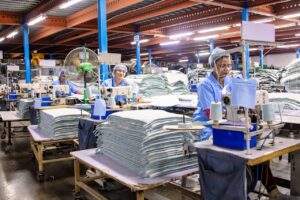
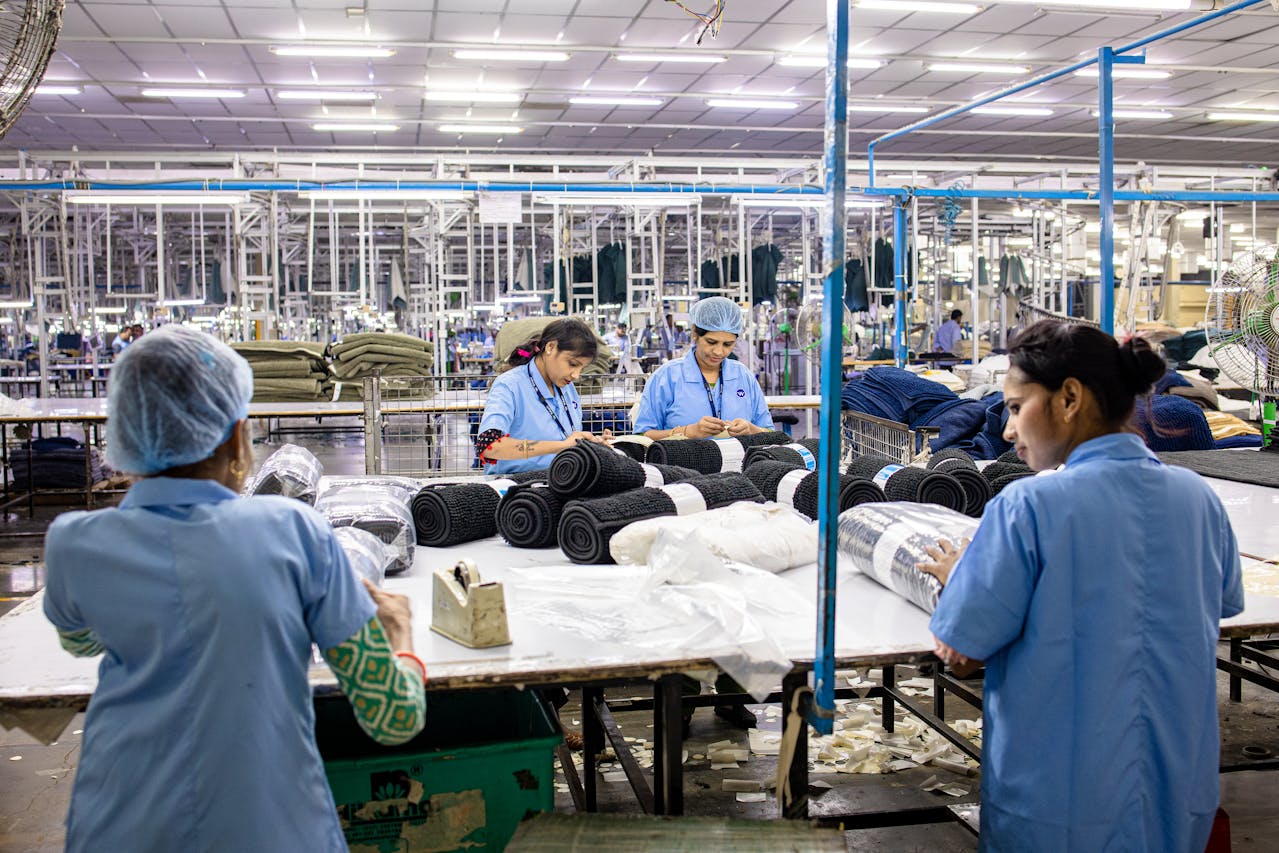
Almarwan Fabrics operates differently. Our in-house manufacturing facilities give us complete control over production. We determine specifications, monitor quality at every stage, and take direct responsibility for results. This control transforms us from traders into craftsmen.
Stage 1: Material Selection and Sourcing
Quality fabric begins with quality fibers. Our sourcing team evaluates cotton grades, synthetic materials, and blended options based on stringent criteria. We test fiber strength, length, consistency, and purity before purchasing.
This initial selection impacts everything downstream. Superior fibers produce smoother yarns, which create better fabrics. Cutting corners here—something trading companies often do to reduce costs—compromises final quality irreparably.
We maintain relationships with trusted fiber suppliers who understand our standards. These partnerships ensure consistent raw material quality, crucial for producing fabrics that perform reliably across different batches and seasons.
Stage 2: Yarn Production and Preparation
Raw fibers undergo cleaning, carding, and spinning to become yarns. Our yarn production processes combine traditional techniques with modern precision. Computerized spinning equipment ensures consistent thread thickness—vital for even weaving and uniform fabric appearance.
Yarn preparation also involves quality testing. We measure strength, twist, and evenness. Substandard yarns are rejected before reaching weaving, preventing problems that would only appear in finished fabric.
This stage exemplifies why in-house manufacturing matters. We control yarn specifications exactly, adjusting for different fabric requirements. A company buying finished fabrics has no input into these crucial early decisions.
Stage 3: Weaving Excellence
The weaving floor is where yarn becomes fabric. Our weaving facilities utilize both traditional and modern looms, selected based on fabric type. Some designs require the precision of computer-controlled looms; others benefit from traditional weaving techniques that create unique textures.
Skilled weavers monitor the process continuously. They detect tension issues, identify thread breaks immediately, and ensure pattern consistency. This human oversight complements automated systems, combining technological precision with experienced judgment.
Different fabrics require different weaving approaches:
Men’s Formal Fabrics: Tight weaves, consistent patterns, emphasis on durability and professional appearance.
Women’s Fashion Fabrics: Varied weaving techniques creating texture, drape, and visual interest while maintaining strength.
Wash-and-Wear Materials: Specific weave structures that resist wrinkling and maintain shape through multiple washing cycles.
Children’s Fabrics: Durable weaves prioritizing fabric resilience while ensuring softness against sensitive skin.
Stage 4: Dyeing and Finishing
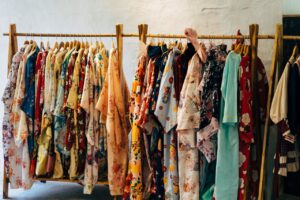
Dyeing transforms woven fabric into the colors and patterns customers desire. Our dyeing processes utilize colorfast dyes that resist fading, bleeding, and deterioration. We test extensively to ensure colors remain vibrant through washing and wear.
Finishing processes add final characteristics: softening treatments, wrinkle-resistance applications, or special coatings for specific performance. These treatments must enhance fabric without compromising breathability or comfort.
Chemical processes require careful environmental management. We monitor water usage, implement filtration systems, and follow proper disposal protocols. Responsible manufacturing considers environmental impact alongside quality and efficiency.
Stage 5: Quality Control and Inspection
Before any fabric leaves our facility, it undergoes rigorous inspection. Our quality control team examines every piece for:
- Weave consistency: No irregularities, missed threads, or pattern breaks
- Color uniformity: Consistent shade throughout the fabric
- Physical defects: Tears, holes, weak spots, or contamination
- Dimensional stability: Proper width and length, resistance to shrinking
- Performance characteristics: Appropriate strength, drape, and hand feel
Fabrics failing inspection don’t reach customers. This uncompromising approach maintains our reputation but requires the financial stability to absorb rejected materials. Trading companies rarely implement such strict controls because they lack this capacity.
Stage 6: Distribution and Delivery
Quality control doesn’t end with manufacturing. Our distribution network—spanning 40+ branches in Pakistan plus operations in Saudi Arabia and the UAE—ensures fabrics reach customers in perfect condition.
Proper storage prevents moisture damage and dust contamination. Careful handling avoids crushing or staining. Efficient logistics ensure timely delivery whether customers order meters or bulk quantities.
This integrated approach—controlling manufacturing and distribution—guarantees the fabric quality we promise.
The Vertical Integration Advantage
Our in-house manufacturing creates several competitive advantages:
Consistent Quality: We maintain specifications across all production runs, eliminating the variations common with multi-supplier sourcing.
Rapid Response: Problems get addressed immediately because we control every stage rather than negotiating with external manufacturers.
Customization Capability: We can modify specifications, develop unique designs, or create exclusive products for partners—impossible when simply trading finished goods.
Cost Efficiency: Eliminating middlemen and controlling the supply chain reduces costs, allowing competitive pricing without quality compromise.
Quality Assurance: Our reputation depends entirely on our manufacturing, creating powerful incentive for excellence at every stage.
Continuous Improvement
Manufacturing excellence requires constant evolution. We invest in new equipment when it improves quality or efficiency. We train staff on emerging techniques. We experiment with new materials and processes.
This commitment to improvement keeps Almarwan Fabrics competitive in dynamic markets. As customer expectations rise and international standards evolve, our manufacturing capabilities adapt accordingly.
The Human Element
Behind all our systems and equipment are skilled professionals: weavers who detect subtle irregularities, dyers who perfect color matches, quality inspectors who refuse to compromise, logistics teams who ensure timely delivery.
These individuals take pride in their craft. They understand that each fabric piece represents our reputation. This human commitment to excellence, combined with modern manufacturing capabilities, creates the quality our customers trust.
Why It Matters to You
Whether you’re a retailer stocking your store, a wholesaler servicing clients, or a business seeking corporate uniform fabrics, our manufacturing approach directly benefits you:
- Consistent quality you can confidently promise to your customers
- Reliable availability based on controlled production capacity
- Responsive service when you need support or have questions
- Competitive pricing reflecting efficient operations
- Partnership with a manufacturer, not just a trader
Understanding how we produce fabrics helps you appreciate what you’re buying and why Almarwan Fabrics delivers value beyond price.
Building for the Future
As we expand into new markets and grow our distribution network, manufacturing remains our foundation. Every branch opening, every international partnership, and every new customer relationship builds on the quality we create in our production facilities.
This manufacturing-first approach positions Almarwan Fabrics for sustainable growth. We’re not dependent on external suppliers who might prioritize other clients or compromise quality to reduce costs. We control our destiny through our production capabilities.
From fiber selection to final inspection, from traditional techniques to modern technology, from local markets to international expansion—it all begins with manufacturing excellence.
That’s the Almarwan Fabrics difference. That’s why businesses across Pakistan, Saudi Arabia, the UAE, and beyond trust us for their fabric needs. And that’s why we confidently say: we do not compromise on quality.
Because when you control manufacturing, quality isn’t a promise—it’s a guarantee.